


Test and Evaluation

Inspection, Evaluation and Certification

Customer and Market Research

Expert Services

Education








How Does a Call Center Help Improve Customer Experience?
How Does a Call Center Help Improve Customer Experience? Today, Customer Experience (CX) has become one of the key factors in customer satisfaction, loyalty, and business success. Customers do not evaluate only the product or service they receive. Instead, their overall experience is shaped by a series of interactions with an organization, from their first

The Role of Artificial Intelligence in the Future of Call Centers
Artificial intelligence is transforming the way Future of Call Centers operate. In the past, most call center activities were performed by human agents. Today, however, a growing number of customer interaction processes can be supported by intelligent technologies. One of the most well-known applications of artificial intelligence is chatbots and virtual assistants. These tools can

What Is the Difference Between a Call Center and a Contact Center?
The terms Call Center and Contact Center are sometimes used interchangeably in organizations. However, there are significant conceptual and operational differences between them. Both structures are designed to manage an organization’s interactions with customers and respond to their needs, requests, and issues. The main difference lies in the range of communication channels, the way interactions

What Is a Call Center and What Role Does It Play in Businesses?
A Call Center is one of the most important communication units through which organizations interact with their customers. In its simplest definition, a call center is an environment where telephone communications between customers and an organization are systematically managed. These interactions may be intended to answer customer questions, register requests, handle complaints, provide services, sell
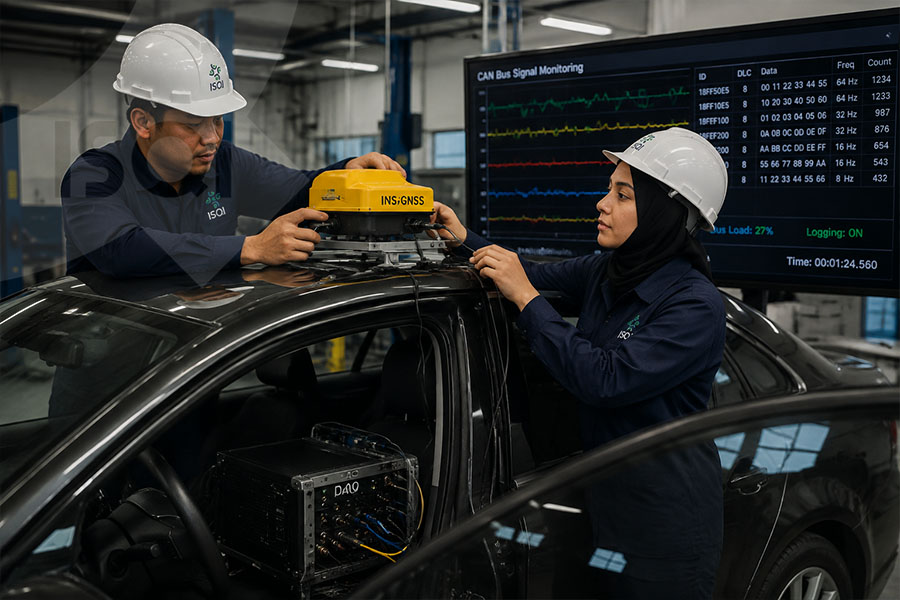
Electronic Stability Control (ESC), Test Methods, and Measurement Equipment in Safety Evaluations – Part Three of Three: Measurement Equipment and Data Analysis
In the second part of this series, we introduced the principal standardized tests used to evaluate the performance of the Electronic Stability Control (ESC) system and discussed their role in assessing vehicle dynamic behavior. However, the results of these tests are only valid and reliable when the vehicle’s dynamic data are measured and recorded with
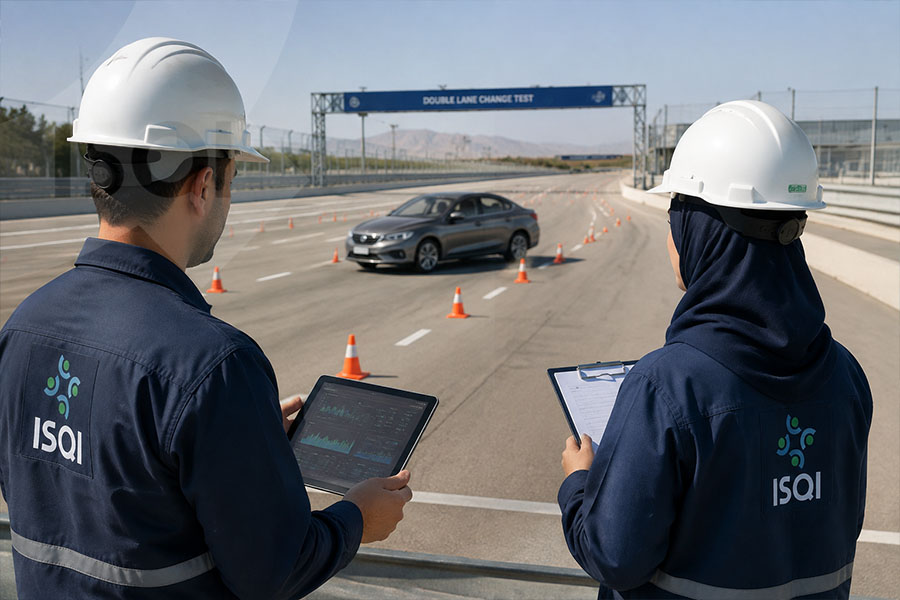
Electronic Stability Control (ESC), Test Methods, and Measurement Equipment in Safety Evaluations – Part Two of Three: Standard Performance Evaluation Tests
In the first part of this series, we introduced the operating principles of the Electronic Stability Control (ESC) system, its main components, the sensors it employs, and the way it intervenes to maintain vehicle stability. However, the proper performance of a control system cannot be ensured solely through sound design; it must also be evaluated

Electronic Stability Control (ESC), Test Methods, and Measurement Equipment in Safety Evaluations – Part One of Three: System Operating Principles
Over the past few decades, the development of automotive safety systems has shifted from focusing solely on reducing injury severity after a crash toward preventing accidents before they occur. This transformation has made Active Safety Systems an essential component of modern vehicle design. Among these systems, Electronic Stability Control (ESC) is considered one of the

Electronic Stability Control (ESC), Test Methods, and Measurement Equipment in Safety Evaluations – Part Three of Three: Measurement Equipment and Data Analysis
Introduction In the second part of this series, we introduced the principal standardized tests used to evaluate the performance of the Electronic Stability Control (ESC) system and discussed their role in assessing vehicle dynamic behavior. However, the results of these tests are only valid and reliable when the vehicle’s dynamic data are measured and recorded